
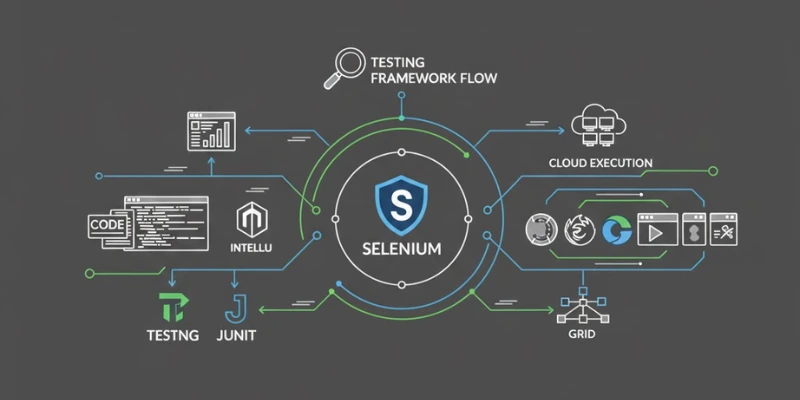
Starting a career in automation testing can feel confusing when you first hear terms like frameworks, test scripts, and execution layers. Many beginners struggle to understand how Selenium fits into real projects and interviews. This is where structured exposure, such as Selenium Training in Trichy helps learners see how testing frameworks bring order, clarity, and efficiency to automation work while building confidence for real-world testing roles.
Why Testing Frameworks Matter in Selenium
A Selenium testing framework is a structured way to organize test scripts, test data, and execution rules. Instead of writing random scripts, frameworks help testers follow a consistent approach. This makes automation easier to understand, maintain, and scale as applications grow.
For beginners, frameworks reduce confusion by separating test logic from execution flow. Interviewers often check this understanding because real projects rarely use plain Selenium without a framework.
Core Components of a Selenium Framework
Every Selenium framework has a few common building blocks. These include test scripts, test data, configuration files, and reporting mechanisms. Together, they ensure tests run smoothly and results are easy to analyze.
Understanding these components helps learners debug failures faster. When something breaks, you know whether the issue is in the script, data, or configuration, which is a key expectation in professional testing roles.
Data-Driven Framework Explained
A data-driven framework separates test data from test scripts. This allows the same test case to run with multiple inputs without rewriting code. Test data is usually stored in external files like spreadsheets or databases.
This approach saves time and improves coverage. It is commonly discussed in interviews because it shows that a tester can design flexible and reusable automation rather than writing repetitive scripts.
Keyword-Driven Framework Simplified
In a keyword-driven framework, actions like click, type, or verify are defined as keywords. Test cases are written using these keywords instead of direct code instructions. This makes automation easier for non-programmers to understand.
Learners with exposure to Software Testing Course in Trichy often grasp this model faster, as it builds logical thinking around test actions rather than programming complexity.
Hybrid Framework and Real-Time Usage
A hybrid framework combines multiple approaches, such as data-driven and keyword-driven models. This gives teams flexibility and better control over complex test scenarios.
Most companies prefer hybrid frameworks because they balance readability, reusability, and scalability. Knowing this framework shows interviewers that you understand how automation adapts to real project demands.
Test Execution, Reports, and Maintenance
Frameworks also handle test execution and reporting. Automated reports show which tests passed or failed, saving manual effort. Maintenance becomes easier because changes are made in one place instead of multiple scripts.
As job demand grows, especially for candidates exploring Selenium Training in Erode, understanding execution flow and report analysis improves employability and confidence during technical discussions.
How Framework Knowledge Impacts Career Growth
Framework knowledge separates beginners from job-ready testers. Companies expect automation engineers to design, maintain, and improve frameworks, not just write scripts.
This skill reflects problem-solving ability and project awareness. Testers who understand frameworks adapt faster to tools, processes, and team expectations across industries.
Selenium testing frameworks turn automation from simple scripting into a structured, career-focused skill. They help testers work smarter, collaborate better, and handle complex applications with ease. As testing continues to evolve, professionals who strengthen their foundation through Software Testing Courses in Erode stay future-ready, confident, and aligned with industry expectations.
Also Check: Overview Of Selenium